0-to-1 field research in a pre-launch market: India
Building the case for India — and the legal and research framework that unlocked every market after it.
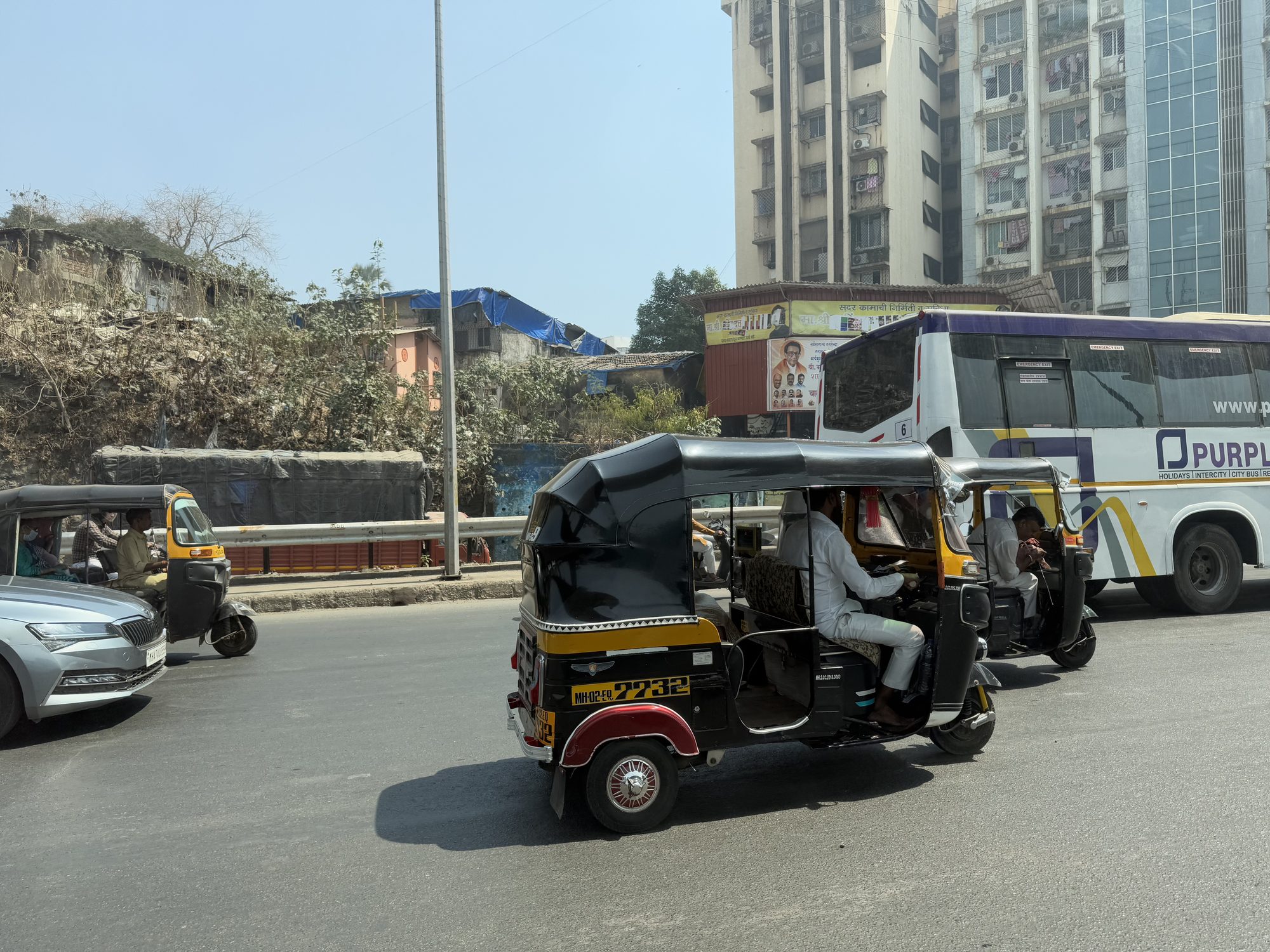
India: a unique AI wearable opportunity
Meta needed to decide how to invest in India for wearables and AI glasses. There’s a lot of unique cultural practices and behaviors that warrant special attention when building for this market. (i.e., simply shipping default en_US and en_GB experiences would not serve the market’s needs, or even sufficiently tackle the most exciting business opportunities). For example, India is the:
- #1 country for WhatsApp usage.
- #1 country for Meta AI usage, especially within the WhatsApp surface.
- Top IG Reels producer & consumer in the world, with a large creator scene that uses Instagram, WhatsApp, and Facebook constantly. Our Partnerships team has organic working relationships with many.
- Home of a growing middle and upper-middle class. iOS market share has gone from 2-4% to 10% over the past several years, thanks to a growing consuming class and the widespread adoption of EMIs (equated monthly installment plans) for electronics and goods.
The study set out to answer five questions:
- Q1: Any blockers identified for May launch?
- Q2: Will the lack of local diction (en_IN), Hindi, and local Indic languages be an issue for launch & retention?
- Q3: What are the top partnership & feature opportunities unique to India?
- Q4: After May launch – what’s the next cultural moment to prepare for as people buy or gift Ray-Ban Meta glasses?
- Q5: What are the top Meta AI Queries to continue improving for India?
Going where the action is: both in the lab and in the field.
India was a pre-release market with significant legal and regulatory ambiguity. There was no playbook for studying an AI hardware product in a country where it didn’t officially exist yet. (Grey markets do exist for AI glasses for general consumers, but officially the company is not supposed to sell and distribute glasses on its own and needs additional approvals).
I planned the study with cross-functional partners across product, legal, and partnerships, then executed it independently through a period of layoffs and re-orgs: 34 combined office and home-visit interviews across Delhi, Gurgaon, and Mumbai — with no research vendor.
This study features 34 interviews with full-time employees based in India, 1 hour each. This study took place between February - March 2025, for two weeks.
- 28 Office Sessions
- 6 Home Visits
- 2 Locales (Delhi + Gurgaon, Mumbai)
How many had Ray-Ban Meta glasses already? 13 / 34
How many tried the core feature set for the 1st time? 18 / 34
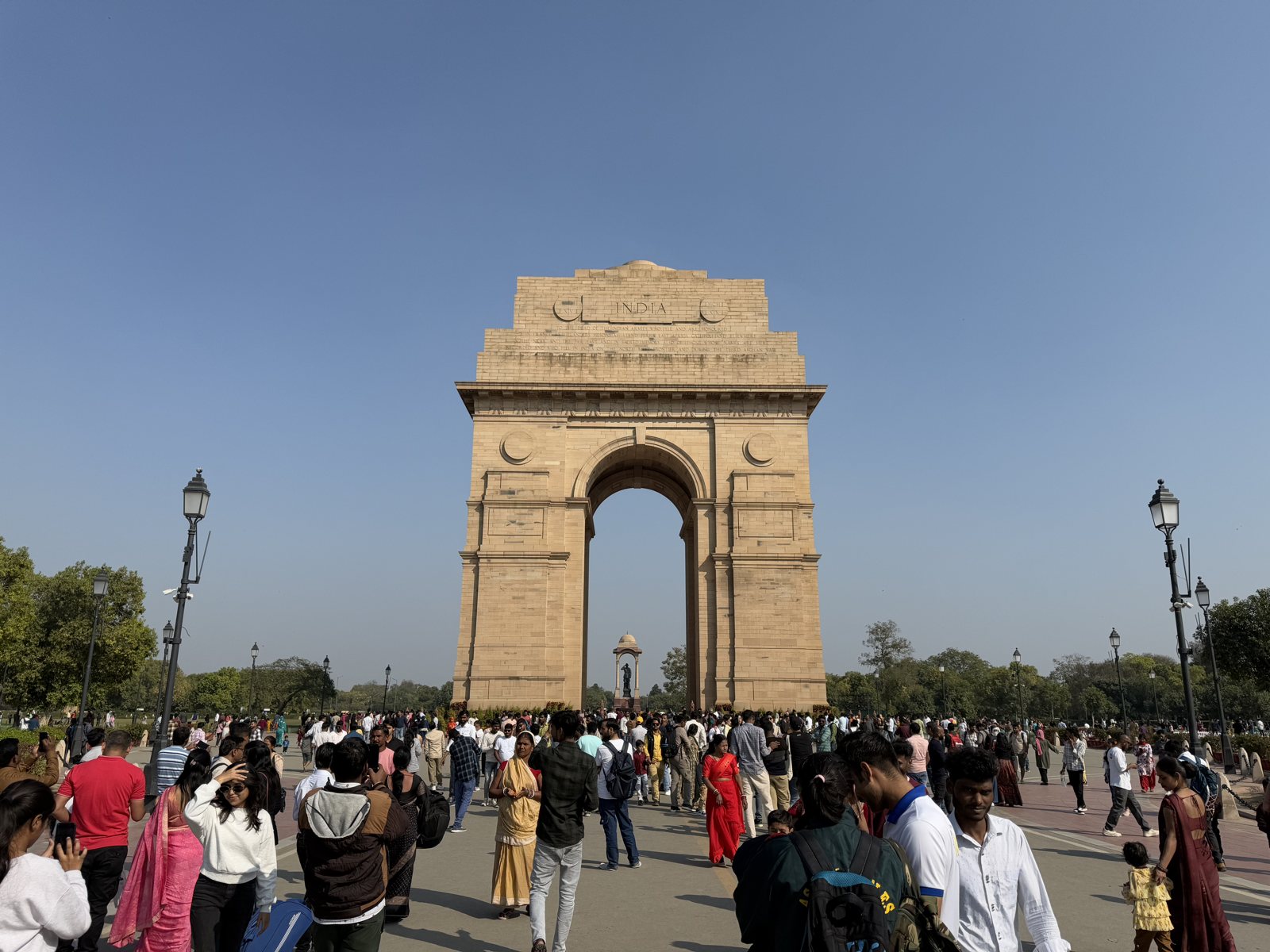
Why Delhi / Gurgaon?
- Delhi is the political capital. Government buildings are concentrated here, Prime Minister Narendra Modi lives here. Delhi is often compared to D.C. in the U.S.
- Gurgaon, the neighboring city in the state of Haryana, features a large tech presence and is part of the NCR (National Capital Region). Before becoming a tech hub, Gurgaon was mostly a farming community. Gurgaon can be compared to the Bay Area suburbs.
- The NCR / National Capital Region is in the top 5 locations when it comes to the number of Wearables early adopters. We picked this because we wanted a sample of north Indian culture.
- Meta has a sizeable office presence in Gurgaon here.

Why Mumbai?
- Mumbai is the fashion and cultural capital. Bollywood is here, the Mumbai stock exchange is there. Mumbai is often compared to New York City.
- The state of Maharashtra was the top state for Wearables early adopters, where Mumbai is located.
- It’s more progressive and open. There’s more of an emphasis on education and trade. It’s also more common to see women walking around alone at night compared to other regions of India.
- WhatsApp and Partnerships teams are also located here.
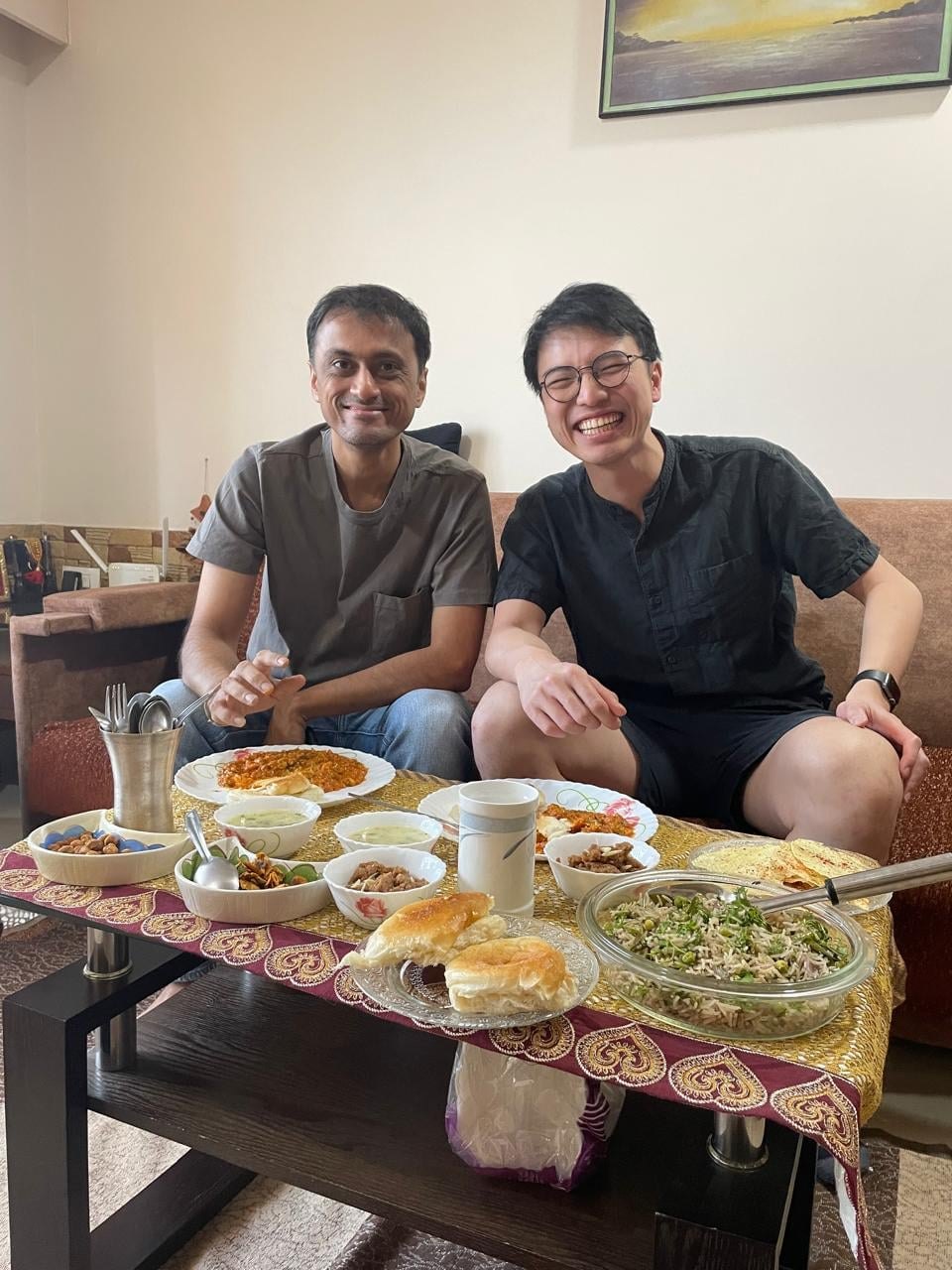
Home visits
For the home visits, we had a mix of different household setups:
- Housing types: multi-floor homes, apartment buildings & flats
- Living situations: multigenerational households, nuclear families, couples, people living on their own. Most also have household help, especially for cooking.
Why internal employees? Research and product teams wanted to preserve ecological validity for evaluating AI experiences and perceptions in the wild, while legal teams wanted to mitigate the risk of having a faulty experiment or participant experience jeopardize future product launches in India and the broader APAC market. (At the time, the Ray-Ban Meta glasses were also still in the process of getting certified to be sold, which further contributed to trade sensitivities).
Ultimately, office & home visits with full-time employees based in India was a happy compromise for getting the product insights we needed.
Note: Meta AI Chatbot + MMAI capabilities are generally blocked in India since it’s a pre-launch country. We used glasses that did not have these restrictions.
Below are some sample findings, with some details hidden or changed to protect confidentiality. They should give a sense of how I construct narratives from qualitative data.
Quick Commerce and Payments.
Quick Commerce was the most requested integration with smart glasses.
More than half the participants organically requested Quick Commerce integration (with Blinkit and Zepto being the most common), as they thought about everyday utility with Ray-Ban Meta glasses. Quick Commerce is a service category that delivers groceries, household items, and electronic goods to you, all within 8-10 minutes.
Common orders via Quick Commerce – weekly, if not daily:
- Milk, eggs, vegetables, fruit, spices (small quantities)
- Missing ingredients for a specific dish or craving
Common situations:
- Forgetting an ingredient right before dinnertime
- Hosting friends and family (especially surprise visitors)
- Ad-hoc groceries (instead of large trips).
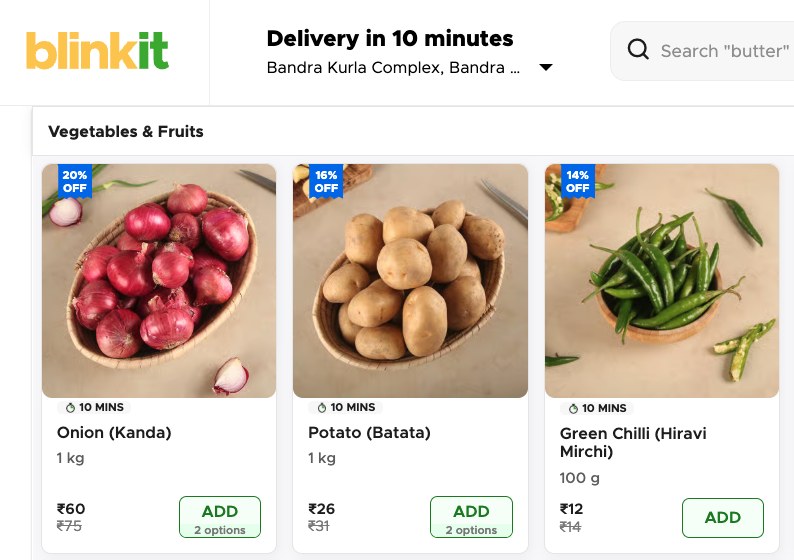
P4 describes her ideal flow for Quick Commerce ordering on the glasses:
- Step 1: “Hey Meta, order XYZ thing.” (P4 gives the example of eggs in the instance she’d like to make an omelette).
- Step 2: Either that grocery item shows up at the doorstep in next 6-8 minutes, or it gets saved to a cart thanks to app integration.
- Step 3: Confirm payment. (Although P4 is unsure of what the mechanism could look like).
Takeaway: The Quick Commerce habit is here to stay for users in India, and many participants indicate feeling comfortable offloading more tasks onto their glasses if they had the capability to do so. Quick Commerce orders are often small items, and carry low stakes (low prices and the cost of an error can be easily replaced or rectified with an additional order). Successful Quick Commerce integration does mean we have prerequisite steps still need to be able to support other journeys like Payments however.
Payments: the #2 top requested feature, given the prevalence of QR codes & UPI
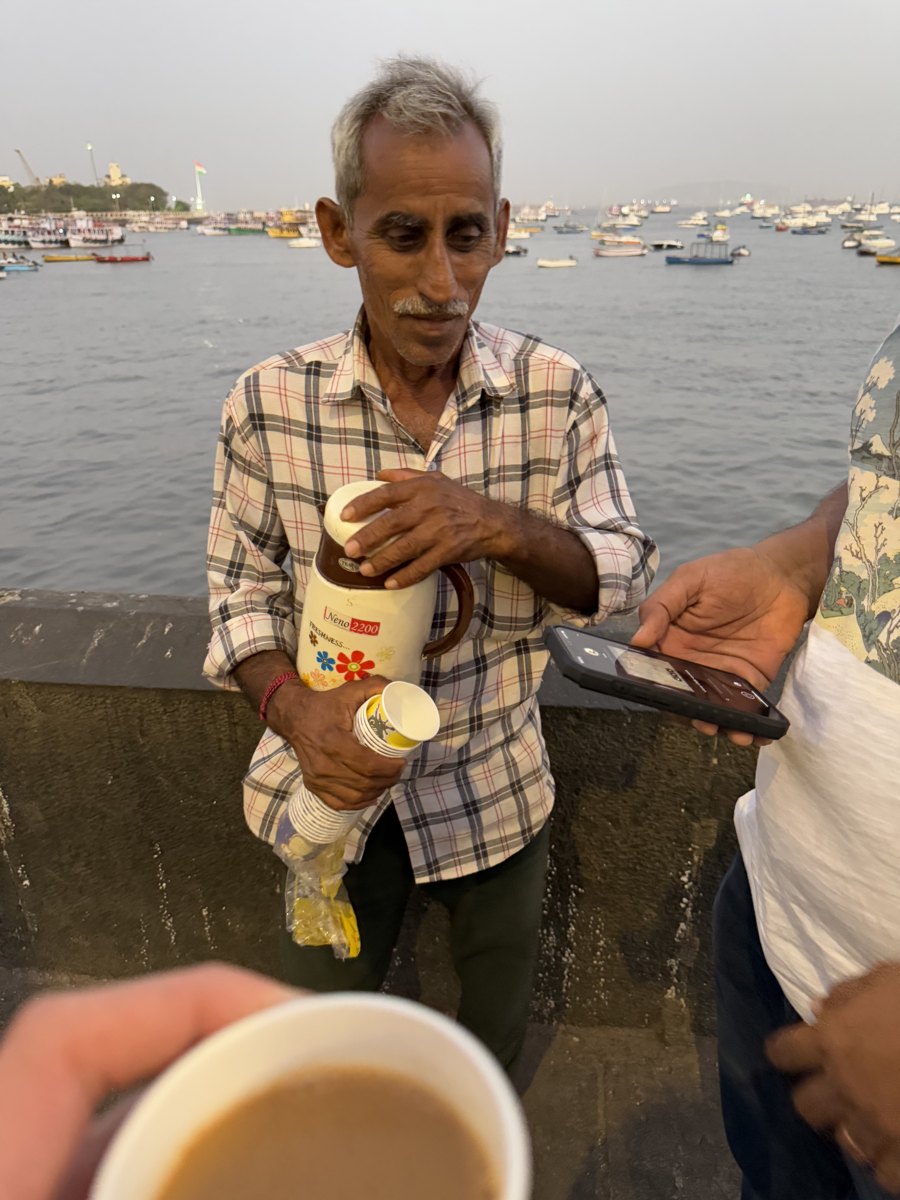
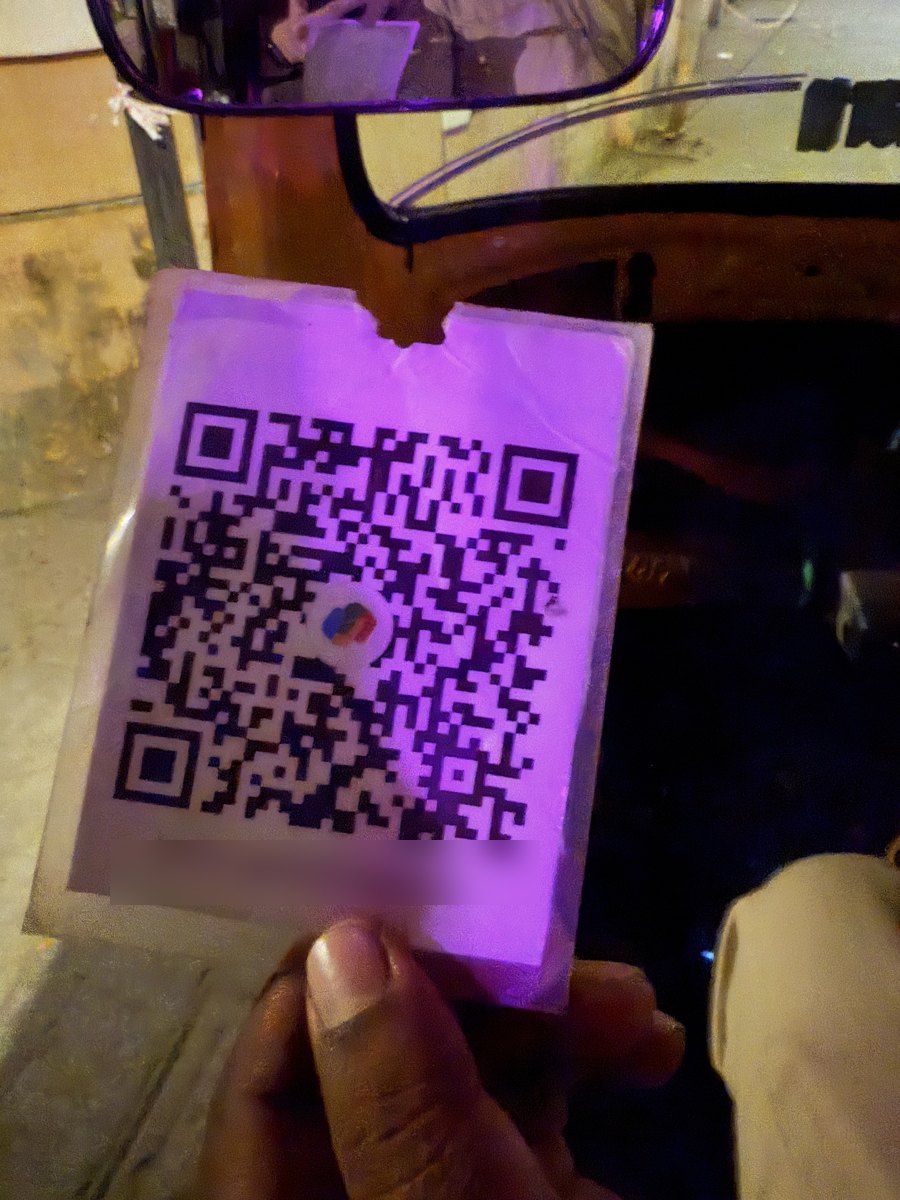
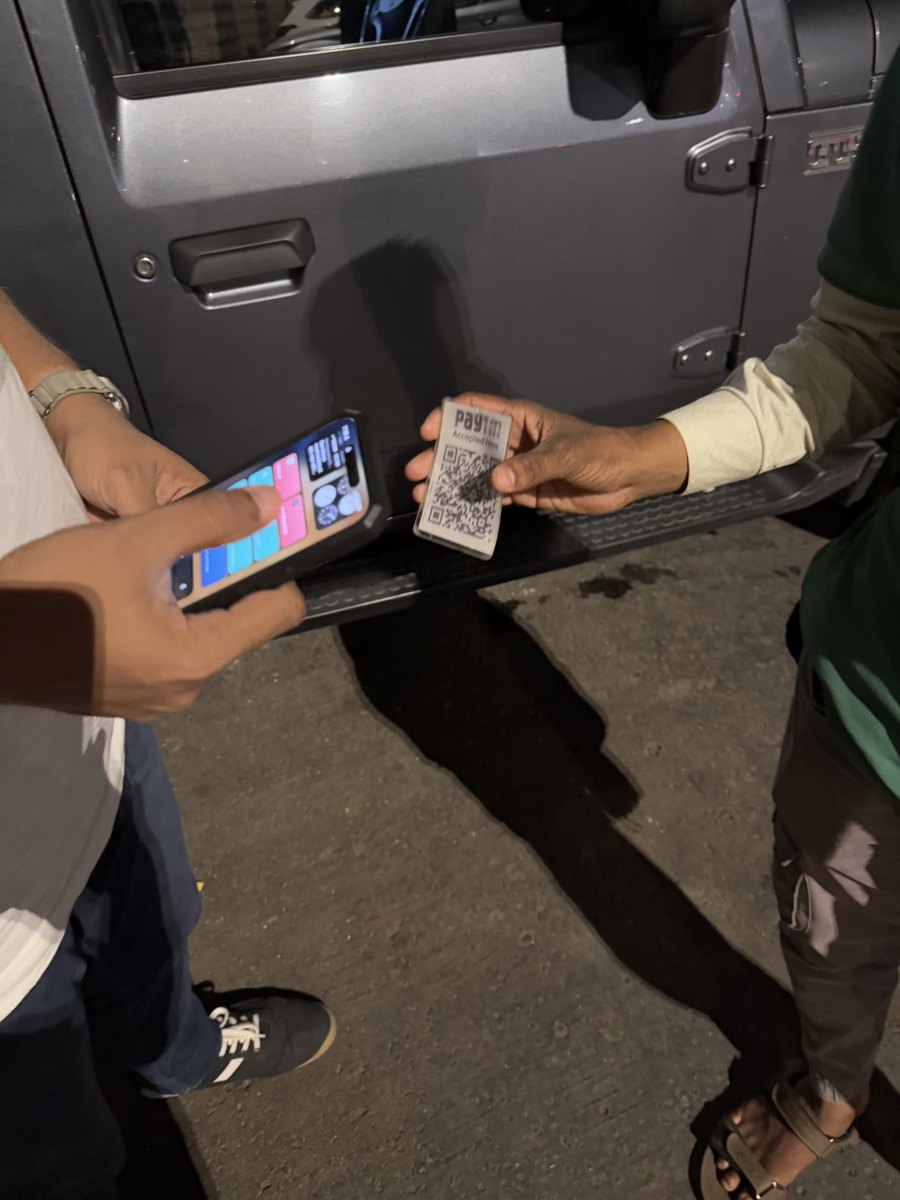
About a quarter of participants organically requested payment integrations for QR codes — the second most requested feature during interviews. These everyday examples include:
- Paying for parking
- Paying for chai, street food, vegetables from vendors
- Paying for your auto rickshaw ride
Cash is still accepted in Indian society, but getting exact change can be difficult. It’s often only carried as an emergency. These QR code payments are often for small amounts, less than ₹1000 INR usually (~$11.5 USD).
P29 talks about how ubiquitous UPI is in Indian society, especially for everyday payments and transactions. P29 walks through examples of his regular payments via his digital wallet.
Here’s the vegetable vendor I’ve paid … this is the cab driver, this is my newspaper guy, this is my trainer … all my payments happen through this.
Opportunity: As RBM users and early adopters seek to offload tasks from their phones into Wearables, Payments represents a very sticky daily use case for India – perhaps other markets, too.
Traffic, cricket, and local diction.
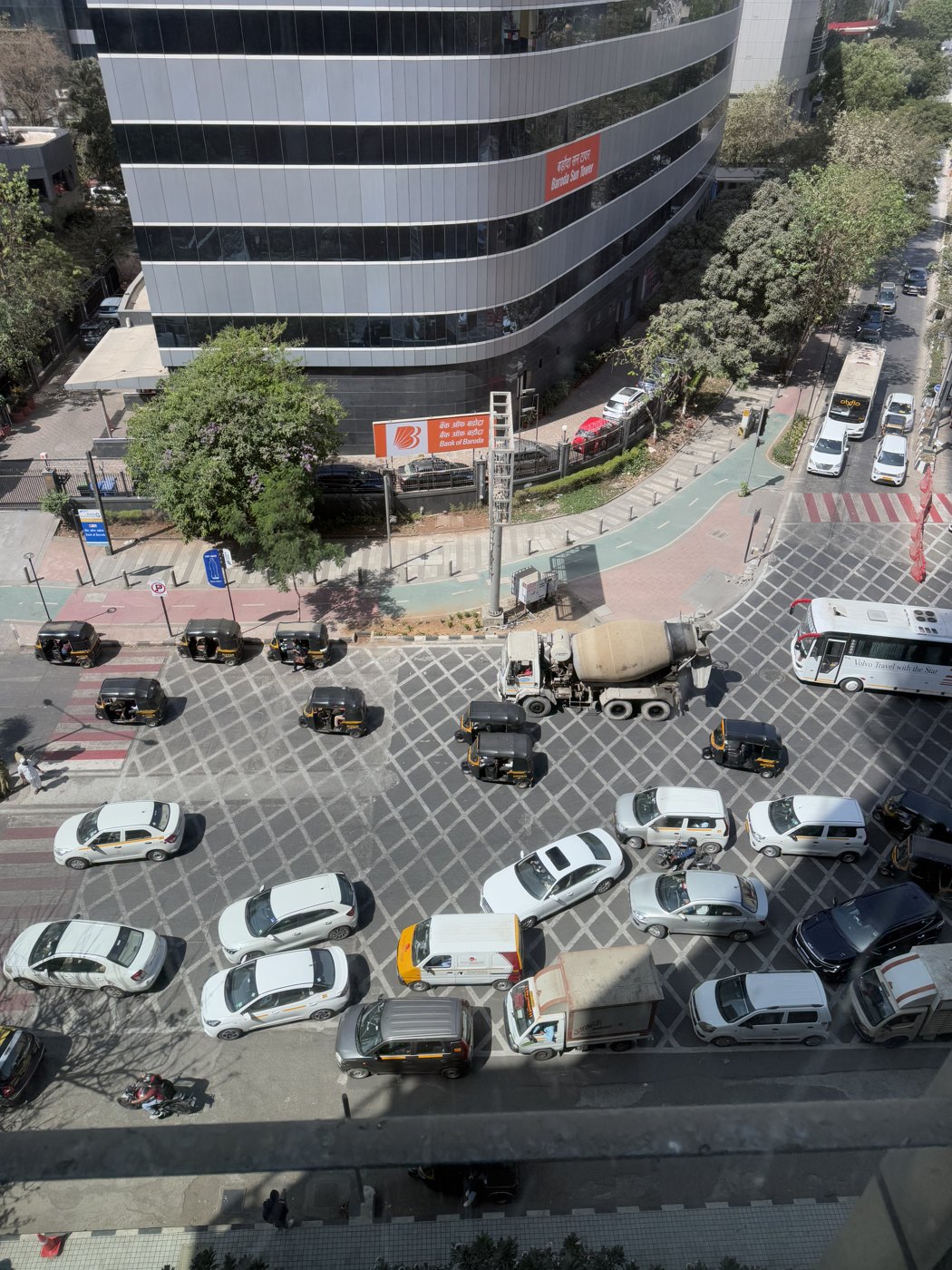
Top Meta AI queries on Wearables include traffic conditions, cricket, news, and experimentations with local recommendations
Raw counts for the most common Meta AI (Chatbot) Queries:
- XX / 34 (XX%) traffic
- XX / 34 (XX%) cricket news & scores specifically
- XX / 34 (XX%) news in general (often top headline summaries)
- XX / 34 (XX%) weather
- XX / 34 (XX%) events nearby, or at specific venues
- XX / 34 (XX%) food and restaurants nearby
- XX / 34 (XX%) AQI [air quality index] specifically
Takeaway: Getting the basic utility and information needs queries right (traffic, cricket, news), and that will develop trust for other Meta AI capabilities we build in the future, especially as they become more capable of conducting actions on our behalf. Yes, cricket is a basic requirement.
Meta AI misinterprets punctuation marks in the context of cricket scores, which can irk avid cricket fans. Information sources, however, are correct.
Meta AI currently reads out cricket score punctuation literally, leading to odd readout experiences. Example: It interprets “244/4” as something to divide as opposed to reading out something like “244 runs scored, and 4 wickets conceded”. Also: the convention is to use a dash ” - ” instead of a slash ” / ”.
- User: “What was the cricket score between india and pakistan yesterday”
Meta AI: “India beat Pakistan by 6 wickets, scoring 244/4 in 42.3 overs, in response to Pakistan’s 241/10 in 49.4 overs, in their ICC Champions Trophy 2025 match yesterday.” - User: “How many runs did virat kohli get yesterday”
Meta AI: “Virat Kohli scored 100 runs yesterday in the India vs Pakistan match at the 2025 ICC Champions Trophy.”
Takeaway: Many of the cricket trivia questions requested of Meta AI are accurate, but the inability to recognize cricket score semantics can erode confidence in Meta AI’s localization, given how popular cricket & queries about cricket are.
Local diction
Nearly all 34 participants commented on Meta AI’s mispronunciation of names, places, and song titles. (en_US was the setting used throughout the study.) Many also acknowledged that competing digital assistants and tools don’t fare much better for local diction (e.g., Google Maps in en_IN, Amazon Alexa), when asked if other digital tools performed better.
Takeaway: Having glasses butcher pronunciations is fine for the goal of selling RBM units alone for 2025.
But if the other goal is to increase adoption and retention for the AI capabilities of glasses (beyond quick information retrieval), we will have to invest in localized diction (en_IN) as a start. Proper pronunciations for Hindi / local language words are especially important for: navigation, names, local knowledge. Especially when Ray-Ban Meta glasses and other displayless glasses do not have additional visuals to fall back on.
A Go decision, a shipped pilot, and a framework seven-plus projects reused.
- A company first. Led and executed Meta’s first-ever international pre-launch field research, for Ray-Ban Meta + Meta AI in India.
- 34 interviews, no vendor. In-home and in-office interviews across Delhi, Gurgaon & Mumbai, run directly — $77K+ saved in vendor costs.
- A risk matrix for VP approval. Created together with the legal team, given the sensitive multi-modal AI capabilities involved.
- A Go decision. Drove the Go for the QR Payments India pilot (publicly launched in the first half of 2026) and landed a top-priority commerce use case on the 2026 internationalization roadmap, with design-leadership buy-in.
- A framework that outlived the study. Reused across 7+ internationalization studies spanning Brazil, Mexico, Korea, Japan, and Singapore.